


Recently we were called by a production in New Jersey that partially takes place in Sicily. Now, not to rag on Jersey, but it ain’t Sicily, so they needed a backing. It did not need to be super specific to a location, just a third story view of a generic Italian coast looking over a port towards cliffs across the water. Unfortunately we do not have anything in our catalog from Italy, but we do from Greece.
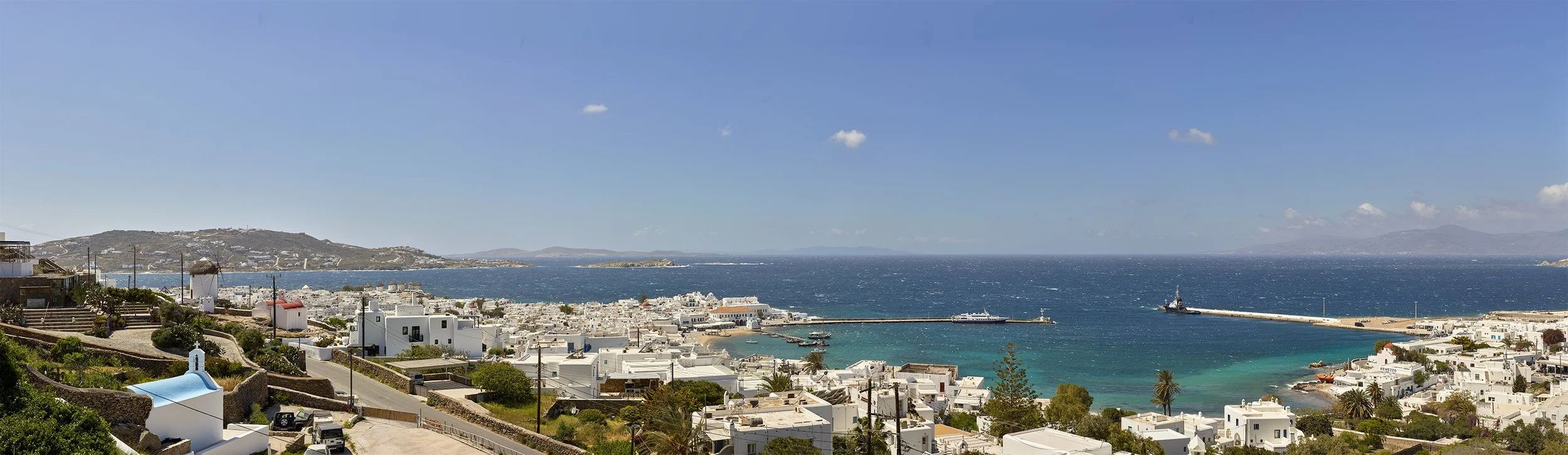
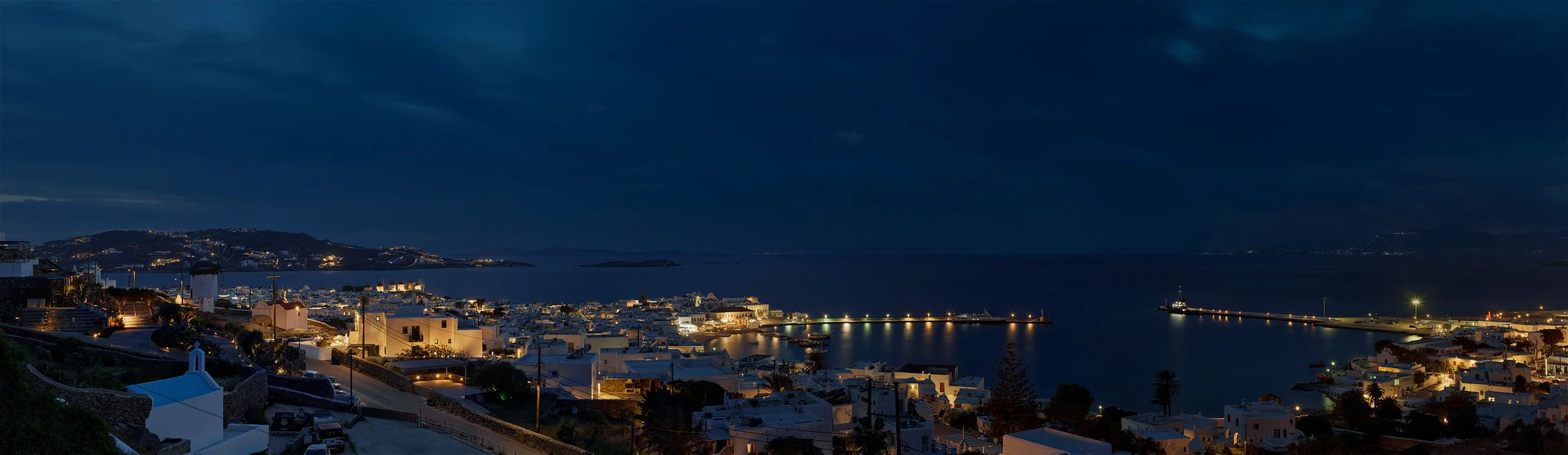
A few years ago I was in Greece for three weeks, mainly for vacation, but I did spend a few days shooting stock photography. One such image was from the house we stayed at on Mykonos, which overlooked the old town and harbor from an elevated position. I was able to capture a day|night of this view, and it was strikingly close to what they were describing. Only problem, it looked Greek not Italian, but that’s what Photoshop is for, and we got to editing.
After cropping down to size and reversing the image (as requested), we first replaced the closed restaurant on the side with a hill/cliff from our stock. This would better mimic the steeper taller coasts of Sicily. To add to the transformation, we also dropped in a cut from Palermo, in Sicily, to the hill across the harbor along with removing the windmills. Next, additional mountainous islands were added to fill in the center along with a new sky.
Given Greece is further south than Italy, most buildings tend to be painted white, cutting down on heat absorption during the summer. This is not as much of an issue in Sicily and there structures retain their natural earth tones. Keeping with the Italian feel, we turned the iconic white buildings of Mykonos terracotta. Fortunately Photoshop has made this significantly easier in the last couple of years. The jetty of the port was removed at this time as well.
The final touch was to drop in tops of palm and cypress trees in the foreground, as if they were partially blocking your view from the third story of a hotel. Honestly, of all of the additional stock we used, these were the most difficult to source. You cant just use images of trees captured from the ground and drop in the tops; it would look off. So we needed to find images of the tops of trees captured from the same height as the top of the tree, which are few and far in between.
Upon completing the day, we then made a night version using a combination of blends from the original night image, hand painting in lights, layering tools in Photoshop and advanced processing in Adobe Firefly.






After getting final approval for print, the backing then went into prepress, which included determining the final blur and seam placement. Given the design of the set, we actually choose to print this backing with each edge panel only being seven feet wide, as opposed to our max of 16. Although this added an additional panel and seam, it allowed for having no seam near any windows or doors on the set, keeping them out of view.

After this it was off the press for printing, off gassing, seaming, edging and shipping. In total, from first call to delivery, this backing took just under three weeks to get to set.